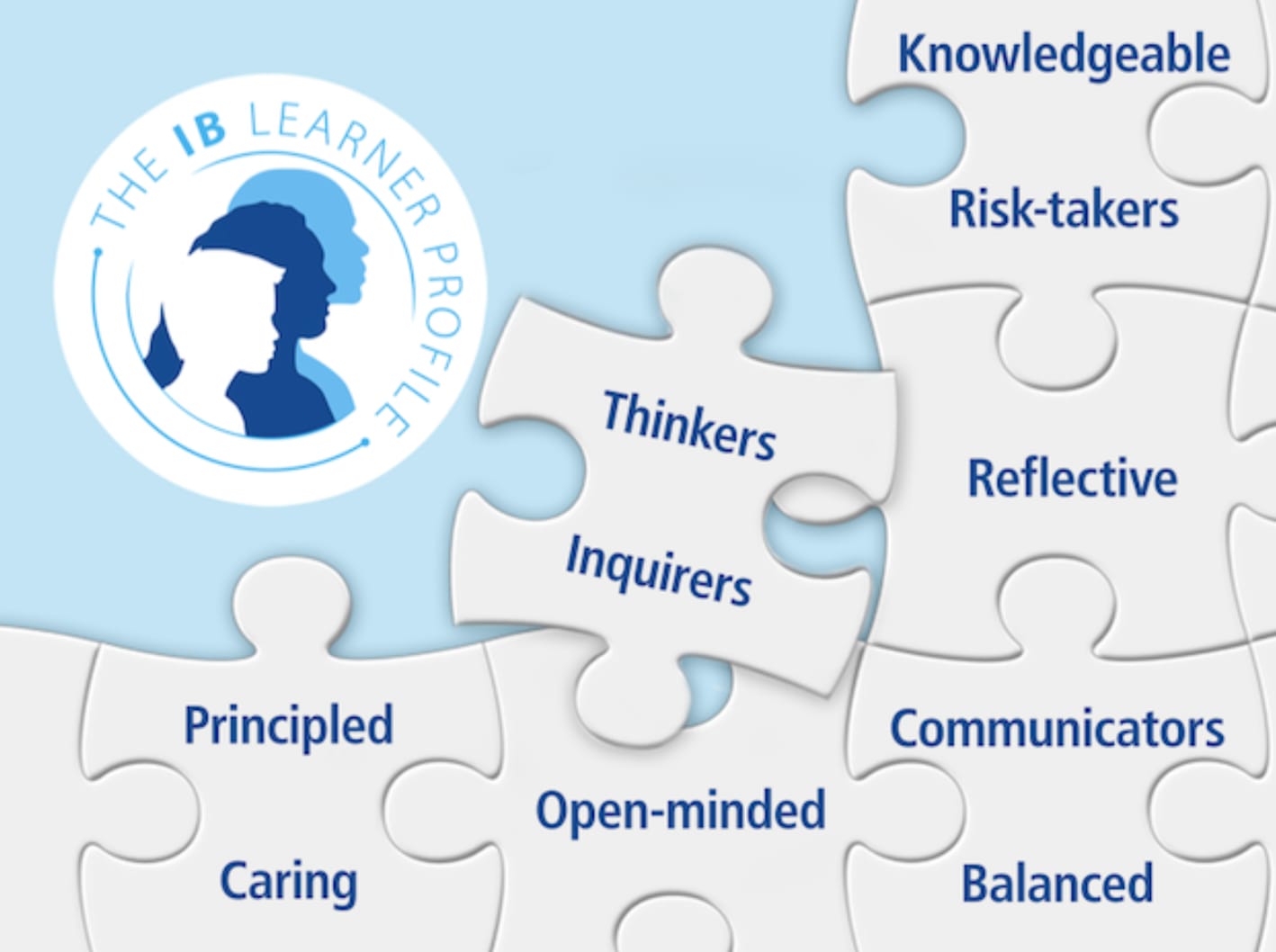
If you have spent any time researching IB schools in Bangkok, you will have seen the phrase IB Learner Profile on school websites, in admissions brochures, and on classroom walls. Schools describe it as a framework, a philosophy, a set of values. It can start to sound like marketing. It is not, but understanding what it actually is makes it easier to ask the right questions when you visit.
What the Learner Profile is
The IB Learner Profile is a set of ten character attributes that the International Baccalaureate Organization defines as the qualities its programmes are designed to develop in students. It applies across all four IB programmes: PYP, MYP, DP, and CP, from age 3 through to graduation. In that sense it is the one thread that runs through the entire IB continuum.
The ten attributes are not subject-specific and they are not assessed in examinations. They describe the kind of person the IB is trying to educate: someone who can think independently, engage with people different from themselves, take responsibility for their actions, and contribute to the world. Every IB World School is expected to embed them into daily school life, not as a separate lesson, but as a lens through which teaching, reflection, and community work are framed.
"The ten attributes are not examined. They are the stated purpose behind everything that is examined."
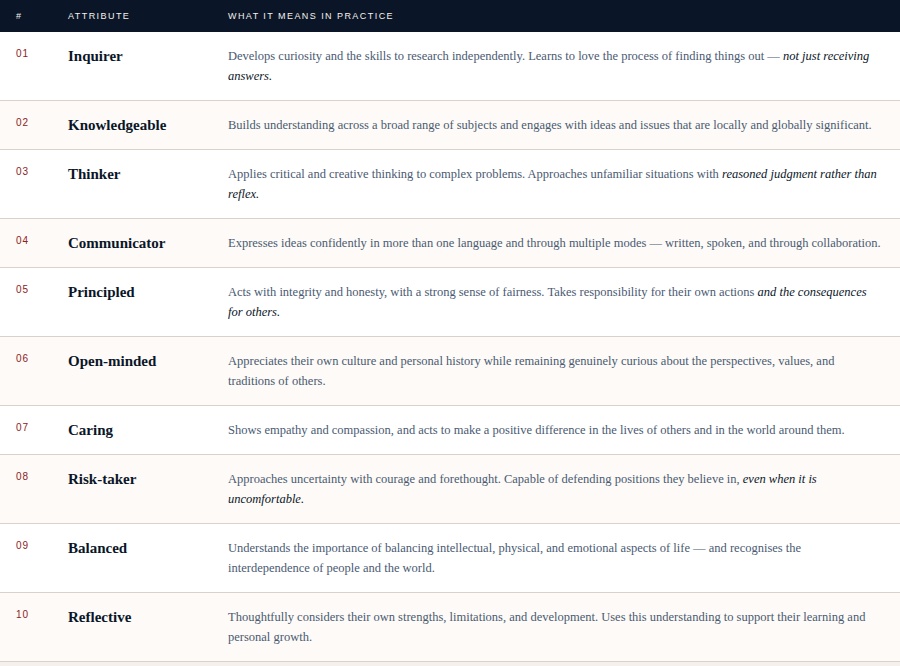
The Ten Attributes
Each attribute has a short IB definition. Below are plain-language interpretations of what they mean in practice.
Why It Matters
The Learner Profile is where IB schools' stated values live. Two schools can both be DP-authorized, charge similar fees, and publish similar university outcomes, but differ significantly in how seriously they treat the Learner Profile in practice. A school that uses it as a genuine framework will reflect it in how teachers give feedback, how service learning is structured, how pastoral care is described, and how the school community talks about student growth beyond grades. A school that prints it on a wall and does little else with it is a different proposition.
The questions worth asking on a school visit: How is the Learner Profile used in student reflection? Is it referenced in report cards or only in marketing? How does the school connect CAS (Creativity, Activity, Service) requirements to specific attributes? You do not need a perfect answer, you need to hear whether the school can give a specific one.
For families comparing IB schools in Bangkok, our IB Curriculum guide covers how the Learner Profile connects to the PYP Exhibition, MYP Personal Project, and DP core requirements across the full IB continuum.
IB Schools in Bangkok
The table below lists Bangkok international schools currently authorized by the IB Organization to offer one or more of its programmes. Authorization status is per-programme, a school can hold PYP authorization without being authorized for the MYP or DP. We verify this against the IB's public school finder; check there directly for current status.
Programme authorization, fees, and school details change. This table reflects publicly available IB authorization data and is updated periodically. Confirm current programme status with each school before making any enrollment decision.
School | IB Programmes | Area |
|---|---|---|
 NIST International School View School Page View School Page | PYP MYP DP | Watthana |
 International School Bangkok (ISB) View School Page View School Page | PYP MYP DP | Nonthaburi |
 Bangkok Patana School View School Page View School Page | DP | Phra Khanong |
Ruamrudee International School (RIS) | PYP MYP DP | Lat Phrao |
 Wells International School - On Nut View School Page View School Page | DP | On Nut / Bang Na |
 Shrewsbury International School (Riverside) View School Page View School Page | DP | Charoen Krung |
 Harrow International School View School Page View School Page | DP | Latkrabang |
 Ascot International School View School Page View School Page | PYP MYP DP | Ramkhamhaeng |
Traill International School | PYP MYP DP | Samut Prakan |
 Concordian International School View School Page View School Page | PYP MYP DP | Lat Krabang |
 St. Andrews Sathorn View School Page View School Page | DP | Sathorn |
Several Bangkok schools offer dual pathways at sixth form, students can choose between the IB Diploma and A-Levels at the start of Year 12. This matters for families enrolling younger children who want to avoid locking in a Diploma-only route years in advance. We cover dual-pathway schools in detail in the IB vs British curriculum comparison.